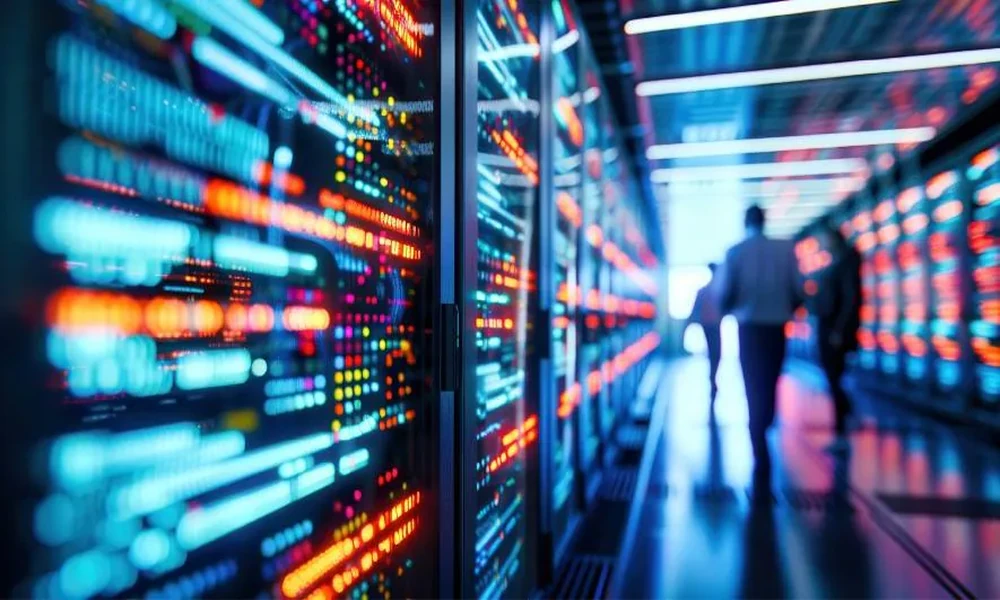

The world’s insatiable appetite for digital services has transformed the humble data center into the backbone of modern civilization. As businesses, governments, and consumers generate and consume more data than ever, high-capacity data centers have become critical infrastructure, quietly powering everything from streaming video to artificial intelligence.
The Rise of High-Capacity Data Centers: Meeting Early Demands
In the early days of enterprise computing, data storage and processing were limited by bulky, energy-hungry hardware and unreliable cooling systems. Companies struggled to balance the exploding need for data with the physical limitations of their facilities. Early data centers often faced outages, overheating, and expensive upgrades just to keep pace with growing demand.
To address these issues, architects and engineers began experimenting with more robust environmental controls and improved layouts. Raised floors provided better airflow for cooling, while redundant power supplies kept servers running during outages. These initial innovations set the stage for the next leap forward.
As technology accelerated, it became obvious that static, one-size-fits-all facilities would never keep up. The industry shifted toward modular and scalable designs, allowing organizations to expand capacity incrementally instead of building for a distant, unknowable peak.
Innovations Driving Modern Data Center Design
Modular construction is now at the heart of high-capacity data centers. Instead of massive, monolithic spaces, today’s centers grow through the addition of prefabricated modules, each a self-contained unit for servers, cooling, and power.
This modularity brings not only flexibility but also cost savings and speed. Data centers can be built, expanded, or reconfigured in months rather than years. As a result, organizations can respond quickly to new technologies and shifting business needs.
Power systems have evolved in tandem. Advanced backup generators and uninterruptible power supplies (UPS) are no longer luxuries; they are essentials for ensuring uninterrupted service. In Montreal, a recent project included a complex generator system with enough fuel storage to run the facility for 48 hours without external power. As sustainability grows in importance, centers are increasingly tapping into renewable energy and adopting energy-efficient cooling systems.
White space, the clear, open areas dedicated to IT equipment, has emerged as a key factor in security and operational efficiency. By designing generous, flexible white space, modern facilities can support high-density racks and future upgrades without costly retrofits.
Case Study: Montreal’s 109,000 Sq. Ft. Data Center
One standout example sits in the metropolitan region of Montreal: a 109,000-square-foot facility designed to stringent class 2 and class 3 standards from the Uptime Institute. This data center features a 35,000-square-foot clean room and a robust 10 MW power capacity, underscoring its readiness for mission-critical workloads.
The project’s design team, including Stendel + Reich data center architect, opted for a modular approach to both the building and its equipment. This decision ensures that the center can efficiently scale over a projected 20-year lifespan, adapting to changes in technology and client needs.
A complex generator system safeguards the center’s operations, providing 48 hours of uninterrupted power in the event of an external grid failure. This level of redundancy is crucial for industries where even a momentary outage can be catastrophic.
Preparing for the Next Wave of Technological Demands
The explosion of data from AI, edge computing, and the Internet of Things (IoT) shows no signs of slowing. Tomorrow’s data centers must be ready to accommodate not just more data, but also more complex processing and heightened security demands.
Staying ahead means integrating new technologies seamlessly. AI-driven automation, for example, can optimize cooling, energy use, and even predictive maintenance, reducing costs while boosting reliability. Edge computing will require facilities to be more distributed, pushing capacity closer to end users for lower latency.
Sustainability is no longer optional. Pressure from regulators and environmentally conscious clients demands that future data centers lead in efficiency, renewable energy use, and minimal carbon footprints.
Lessons Learned and Best Practices for Future Data Centers
If one lesson stands out, it is the value of scalability and modularity. Facilities that can grow and adapt on demand avoid the pitfalls of overbuilding or outgrowing their original purpose.
But redundancy comes with a price. The best designs strike a balance, providing enough backup power, cooling, and connectivity to guarantee uptime, without sending costs spiraling out of control. Planning for resilience means considering every layer, from physical security to network architecture.
The Future Landscape: Evolving Roles of Data Centers
Looking ahead, the centralized mega-center is giving way to a distributed ecosystem. Data centers will be everywhere, from urban cores to remote edge nodes, each tailored to specific needs and regulatory environments. Environmental and energy standards will become even more demanding as authorities push for greener operations.
By 2040, expect data centers to be smarter, more responsive, and deeply integrated with renewable energy grids. As digital demands keep multiplying, the real lesson is clear: only the most adaptable centers will thrive.